Reference address for this file -
http://www.psindiancoins.com/unzipped//Europe/Bengal/OtherMints/AllSaugor.htm
The year 55 coins were copied at Gurrah Kotah. These copies might
be distinguished by their crude nature although this is stated to be difficult
to do. The year 55 coins struck by the Marathas at Saugor cannot be distinguished
from those struck by the British.
|
|
|
|
|
|
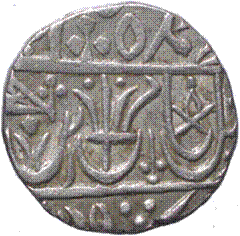
sikka zad bar haft kishwar sāya fazl
ilāh hāmī dīn muḥammad shāh ‘ālam
bādshāh [AH date] (= Defender of the religion of Muḥammad,
Shāh ‘Ālam Emperor, Shadow of the divine favour, put his stamp on
the seven climes, [AH date]) |
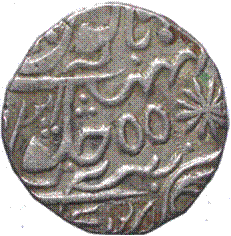
ẓarb ravishnagar sāgar sanah 55 julūs
maimanat mānūs (= Struck at Ravishnagar
Saugor in the 55 year of his reign of tranquil
prosperity). |
||




|
|
Rupee |
Half Rupee |
Quarter Rupee |
|
Actual
Weight (g) |
10.92-11.08 |
~5.5? |
~2.7? |
|
Actual
Diameter (mm) |
19.5-20.4 |
~16? |
~14-15? |
|
Metal |
Silver |
||
|
Edge |
Plain |
||
Catalogue
|
Cat No. |
Photo Link |
MW |
Denomination |
AH |
RY |
Provenance |
Comments
|
Rarity
|
|
8.134 |
√ 1862. |
T3 |
Rupee |
? |
55 |
Ste, Bombay |
Slight differences in reverse
ornaments between these two, particularly longer lines in the word above the
RY on 8.135 |
C |
|
8.135 |
√ 1862c. |
T3a |
” |
? |
55 |
RJ |
S |
|
|
8.135C |
T3a |
Half Rupee |
? |
55 |
|
|
RR |
|
|
8.136 |
T3 |
Quarter Rupee |
? |
55 |
|
|
RR |
See also Garhakota Mint of Scindias and Coins of the Marathas
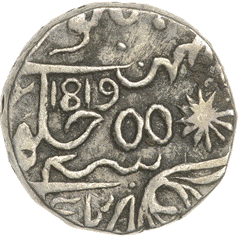
Issued to try to prevent the
copying of the Saugor rupee at Gurrah Kotah. The coins have Saugor on the obverse and 1819 on the
reverse. This coin was first reported by P.
Kulkarni (Kulkarni, P., draft of paper in my files
from R.D. Shah. Subsequently
published: Numismatic Digest (1988/89), vol 12/13, pp.
119-122).
|
|
|
|
|
|
sikka zad bar haft kishwar sāya fazl
ilāh hāmī dīn muḥammad shāh ‘ālam
bādshāh Saugor (= Defender of the religion of Muḥammad,
Shāh ‘Ālam Emperor, Shadow of the divine favour, put his stamp on
the seven climes, “Saugor” in crude English letters). |
ẓarb ravishnagar sāgar sanah 55 julūs
maimanat mānūs (= Struck at Ravishnagar
Saugor in the 55 year of his reign of tranquil prosperity). “1819” in
English, above the word julūs. |
||



|
Actual
Weight (g) |
10.77-11.03 |
|
Actual
Diameter (mm) |
19-20 |
|
Metal |
Silver |
|
Edge |
Plain |
Catalogue
|
Cat No. |
Photo Link |
MW |
AH |
RY |
Provenance
|
Comments
|
Rarity
|
|
8.137 |
√ 1865. |
T4 |
? |
55 |
Lingen, Noon, Oswal |
Ref: HK/Singapore (1997), Sale 25,
Lot 676. Three specimens known. See photos |
RRR |
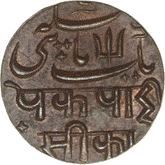
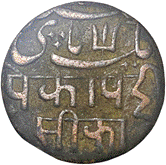
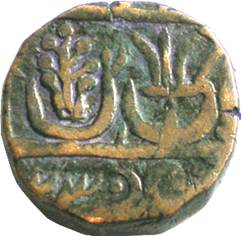
If copper coins were issued from the old
Saugor mint during the time that the British kept it operating, then they would
have been dated RY 55. However, the exact style is not known. They could be
identified by their Hijri dates (1234 or later). Two possible examples with RY
55 and unknown Hijri dates are shown below.
|
|
|
|
|
|
|
|
||
|
|
|
||



|
|
Takka |
Pice |
|
Actual
Weight (g) |
~15? |
~12? |
|
Actual
Diameter (mm) |
~20? |
~20? |
|
Metal |
Copper |
|
Catalogue
|
Cat No. |
Photo Link |
MW |
Denomination |
AH |
RY |
Provenance |
Comments
|
Rarity
|
|
8.140 |
√ 1868. |
T5f |
” |
? |
55 |
MW |
|
R |
|
8.141 |
√ 1869. |
T5j |
Pice |
? |
55 |
MW |
|
R |
The previously listed 8.138 and 8.139 takkas have been deleted. Known examples are dated AH 1230
and 1229 respectively and fall into the Maratha era.
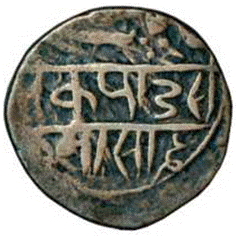
P. Kulkarni first reported this
coin, which is distinguished particularly by the reverse legend
|
|
|
|
|
|
sanah
julūs
45 shāh ‘ālam bādshāh (= in the 45th year of the Emperor
Shāh ‘Ālam). |
ek
pai sa (or sata) masa (= This coin weighs seven mashes). |
||



|
Official
Weight (g) |
6.80? |
|
Actual
Weight (g) |
6.23-6.52 |
|
Actual
Diameter (mm) |
19.9-22.3 |
|
Metal |
Copper |
|
Edge |
Plain |
Catalogue
|
Cat No. |
Photo Link
|
Provenance
|
√ Comments
|
Rarity
|
|
8.142 |
√ 1870. |
Ste |
RRR |
No dot or inverted V on obverse or reverse.
Also struck at the mints of Calcutta, Banares and Farrukhabad. See Pridmore p. 257-258
|
|
|
|
|
|
sikka zad bar haft kishwar sāya fazl
ilāh hāmī dīn muḥammad shāh ‘ālam
bādshāh [AH date] (= Defender of the religion of Muḥammad,
Shāh ‘Ālam Emperor, Shadow of the divine favour, put his stamp on
the seven climes, [AH date]) |
ẓarb farruckābād sanah 45
julūs maimanat mānūs (= Struck at Farrukhābād in his
45th year of tranquil prosperity) |
||


|
|
Rupee |
Half Rupee |
Quarter Rupee |
|
Official
Weight (g) |
11.66 |
5.83 |
2.91 |
|
Actual
Weight (g) |
11.62-11.67 |
? |
? |
|
Actual
Diameter (mm) |
24.7-25.1 |
~23 |
~17 |
|
Metal |
Silver |
||
|
Edge |
Straight
Grained |
||
Catalogue
|
Cat No. |
Photo Link |
Pr. No. |
Denomination |
Provenance
|
Comments
|
Rarity
|
|
8.143 |
√ 1871. |
325 |
Rupee |
Ste, Noon |
Distinguished from the rupees struck
at other mints by the absence of any privy mark. |
N |
|
8.144 |
- |
Half Rupee |
|
None found but referred to in IOR.
See comments. |
NR |
|
|
8.145 |
- |
Quarter Rupee |
|
None found but referred to in IOR.
See comments. |
NR |

No dot or inverted
v at bottom of obverse
See Pridmore pp.
259-260.
|
|
|
|
|
|
8.147 at top.
8.148 below |
|||
|
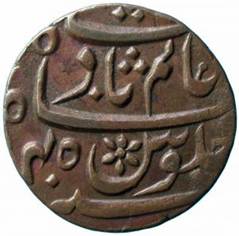
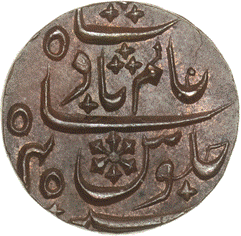
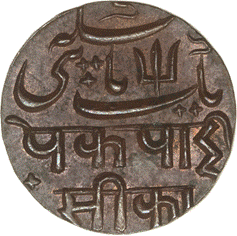
sanah
julūs
45 shāh ‘ālam bādshāh (= In the 45th year of the Emperor
Shāh ‘Ālam). |
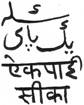
The value in two languages: Bengali: ek pai sikka. Persian: yek pai sikka. (Translates as one pai
sikka). N.B. trisūl in Persian inscription. |
||


|
Official
Weight (g) |
6.48 |
|
Actual
Weight (g) |
6.11-6.55 |
|
Actual
Diameter (mm) |
21.5-24.5 |
|
Metal |
Copper |
|
Edge |
Plain |
Catalogue
|
Cat No. |
Photo Link |
Pr. No. |
Provenance |
Comments
|
Rarity
|
|
|
8.146 |
√ 1872. |
337 |
A |
RJ |
Trident in sīn of julūs |
S |
|
8.147 |
√ 1873. |
338 |
B |
Ste, Noon |
rosette in sīn of julūs . Comes with thick
and thin letters (R. Weir). Also, sometimes appears to have an inverted V
above b of bad but see obverse varieties. |
|
|
8.148 |
√ 1874. |
339 |
C |
Ste, Noon |
Spiky rosette in sīn of julūs |
|
|
8.148C |
√ 1874c. |
- |
C |
Vinod Jaiswal |
Ek Pai written as Peka Pai in bottom
Bengali legend. See Journal of the
Numismatic Society of Calcutta, 2024, p. 40 |
RR |
|
|
|
|
Correct spelling |
8.148C. ek pai misspelt as peka pai.
Vertical stroke left instead of right in first line of Bengali legend |